The rules have changed. Nigerian businesses need to know this right now.
Let me tell you something that most branding advice will not say out loud.
2026 is not business as usual.
The way customers discover brands has shifted. The way they decide who to trust has shifted. The way they choose who to buy from has also shifted and if your brand has not caught up with what is actually happening in the market right now, you are both behind and invisible.
I am not saying this to scare you. I am saying it because I work with businesses every day who are talented, hardworking, and genuinely excellent at what they do and yet they are struggling to attract the clients they deserve. Not because their work is not good enough. But because their brand is not communicating that it is.
So let’s fix that. Here are the branding truths you need to carry into 2026 and what to actually do about them.
1. Credibility is your most valuable brand asset right now
We are living in the age of AI. And one of the most significant and most undertalked shifts happening in branding right now is this: AI tools and search engines are increasingly acting as the first point of contact between your brand and your potential client.
Before a person even clicks on your website, an AI-powered search has already formed an impression of your brand based on what it could find, verify, and trust about you online.
This means your brand can no longer afford to be vague, inconsistent, or under described. Credibility has moved away from just impressing humans to being legible; clear, consistent, and authoritative across every digital surface your brand touches.
Now, what does this mean?
Your website needs to clearly state who you are, who you serve, and what you do. Your social media needs to feel cohesive and professional. Your brand voice needs to be consistent whether someone finds you on Instagram, LinkedIn, or Google.
Credibility is built in the details. And right now, those details matter more than they ever have before.
2. Strategy before everything — still and always

I know you have heard this before. But I will keep saying it for as long as businesses keep skipping it.
The number one mistake brands make in 2026 is the same mistake they made in 2016, leading with design before strategy. Choosing colors because they look pretty. Writing a tagline because it sounds clever. Building a visual identity before answering the most foundational questions a brand must answer.
Who are you? Who are you for? What do you stand for? What do you want people to feel the moment they encounter your business?
These questions are not warm-up questions. They ARE the strategy. And every design decision, every color, every font, every piece of copy should flow from the answers to these questions.
A brand without strategy is decoration. And decoration does not attract premium clients. It just looks nice while your ideal customer walks past.
What this means for you:
Before you refresh your logo, before you redesign your website, before you hire anyone to touch your visual identity, build the strategy. Write down exactly who your brand is for, what problem you solve, and what makes you different. That document is the foundation everything else is built on.
3. Own your audience. Stop renting it from algorithms
Here is something that has become painfully clear for creators and business owners across the board in 2026.
You do not own your Instagram audience. You do not own your LinkedIn following. You are renting them from platforms that can change the rules at any moment. Your reach drops overnight. Your account gets restricted. The algorithm shifts and suddenly nobody sees your content.
The businesses that are winning in 2026 are the ones that understood this early and started building audiences they actually own. Email lists. Newsletters. Websites. Communities. Spaces where no algorithm stands between you and the people who want to hear from you.
If someone subscribes to your email list, that is yours. When you send an email, every single person on that list receives it. No algorithm. No boosting required. No guessing game.
What this means for you:
Start building your owned audience now. A newsletter. A website blog with SEO-optimised articles. A community space. These are long-term investments but they are the most stable ones you will make in your brand. Social media should drive people to your owned platforms not be the final destination.
4. Purpose is no longer a nice-to-have
Consumers especially the next generation of premium clients, do not want to know what you sell. They want to know why you exist.
94% of consumers say they value brands with a purpose beyond making a profit. And more importantly, they can feel the difference between a brand that has genuine values baked into its foundation and one that slapped a mission statement on its website to look good.
Purpose-driven branding is not charity work. You are being clear on what your business stands for and letting that clarity drive every decision from how you communicate to who you work with to what you refuse to compromise on.
Your WHY is a brand asset. Treat it like one.
What can you do to make these changes in your business?
Revisit your brand’s foundation. Why does your business exist beyond making money? What change are you trying to create in your industry, your community, or your client’s life? The answer to that question belongs at the centre of your brand messaging not buried in an about page that nobody reads.
5. Consistency is what separates growing brands from struggling ones
You can have the most beautiful logo in your industry. The most creative content. The most compelling offer. And still lose clients because your brand feels like three different businesses depending on where someone finds you.
Consistency is one of the most quietly powerful competitive advantages a brand can have. When every touchpoint feels like it belongs to the same family — your website, your social media, your emails, your proposals, your client experience, something powerful happens. People begin to trust you before they have even spoken to you.
And trust, in 2026, is the currency that converts.
Inconsistency does the opposite. It creates doubt. And doubt makes people hesitate. And hesitation kills sales.
What can you do to change this right now?
Audit your brand across every platform right now. Does your Instagram look like your website? Does your LinkedIn bio sound like your brand voice? Are you using the same colors, fonts, and tone everywhere you show up? If the answer is no — that is not an aesthetic problem. That is a trust problem. And it needs to be fixed.
6. Visual identity should be adaptive — not rigid
Here is a nuance that most small businesses miss. Being consistent does not mean being static.
The brands that are standing out in 2026 have built visual identities that are flexible enough to show up beautifully across different platforms, formats, and contexts while still feeling unmistakably like themselves. A logo that works on a business card AND on a phone screen. A color palette that feels right in a Reel AND in a corporate proposal. A design system that scales.
This is what brand guidelines are for. Not a rigid rulebook that locks you in but a living framework that keeps your brand cohesive as it evolves.
Your brand guidelines should cover more than just your logo and colors. They should define how your brand speaks, how it feels, how it shows up in motion and in stillness, in formal contexts and casual ones. A well-built brand guideline document is one of the most valuable assets your business can own.
7. Your personal brand and your business brand should work together

This is especially important for founders and solo business owners and it is something that Nigerian entrepreneurs are only just beginning to understand at scale.
In 2026, people buy from people. The founder’s story, the founder’s voice, the founder’s presence; these are not separate from the business brand. They amplify it.
When your personal brand is clear, authentic, and consistently visible, it does something your logo cannot do alone. It makes your business human. And humans trust humans.
This does not mean you should overshare. showing up with a point of view that creates value is the goal. Having something to say. Being willing to be known for something specific. The businesses that are winning premium clients right now almost always have a founder who is visibly building in public, sharing their thinking, their process, their perspective.
What this means for you:
Think of your personal brand as the bridge between your business and the people you want to reach. Share your expertise. Tell your story. Let people see who is behind the brand. Not because the world needs to know everything about you but because the right clients need to know enough to trust you.
8. Premium positioning requires premium presentation
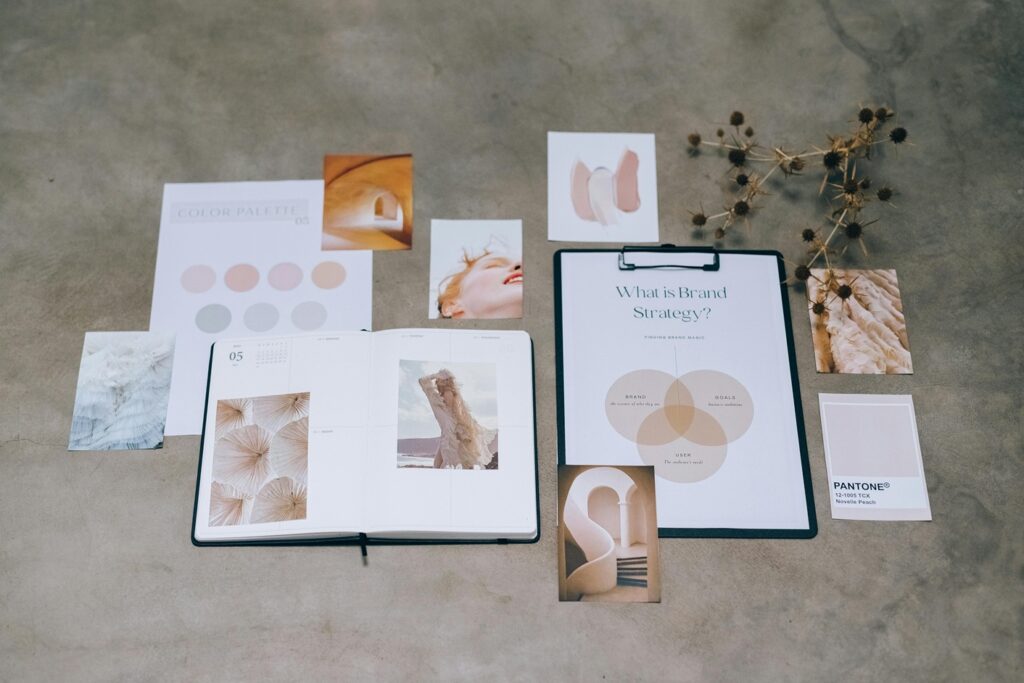
If you want to attract premium clients people who invest seriously, who respect your process, and who refer their network to you, your brand needs to look like it is already serving those people.
Premium clients make decisions based on trust and credibility. And they read both of those things from your brand before you ever speak to them. Your pricing, your packaging, your messaging, your visual identity, every element sends a signal. And if any of those signals say “budget,” that is the client you will attract.
This is not to say be expensive for the sake of it. No. Ensure that every touchpoint of your brand communicates the level of quality, care, and intentionality that your actual work delivers.
How can you do this?
Look at your brand with the eyes of your ideal premium client. Does your website reflect the quality of your work? Does your content communicate authority? Does your visual identity feel like it belongs in the room with the clients you want? If the answer is not a confident yes, that is the gap to close.
The bottom line
Branding in 2026 is not in every trend. It is not in redesigning your logo every year or reinventing your voice every season.
It is building something solid. Something credible. Something consistent. Something that clearly communicates who you are, who you are for, and why you are the only option that makes sense for the right client.
Strategy. Consistency. Purpose. Credibility. Ownership.
These are not new concepts. But they have never mattered more than they do right now.
And the businesses that understand this, the ones that stop treating branding as decoration and start treating it as foundation, those are the businesses that will own 2026.
Ready to build a brand that works as hard as you do? At Vic-Norah, we build brands from the inside out; strategy first, design second, transformation always.Email: brandhub@vicnorah.com