How to Use Psychology to Win in Business Marketing
If you understand how people think then you will most likely be a smart marketer.
There is a marketing conversation happening in Nigerian business spaces right now that I find both exciting and slightly frustrating.
Exciting because more business owners are investing in their marketing than ever before. Frustrating because most of what they are investing in is noise.
More content. More ads. More posting. More following trends. More doing what everyone else is doing and wondering why the results feel thin.
Marketing has shifted from selling to influence. And the most powerful form of influence has nothing to do with how much you post or how big your budget is. It has everything to do with understanding how human beings are wired to make decisions and building your marketing around that understanding.
That is psychology in marketing. And once you understand it, you will never see your business the same way again.
Why psychology matters more than strategy in marketing
Strategy tells you what to do. Psychology tells you why people respond.
You can have the most beautifully designed campaign, the most perfectly written copy, and the most targeted ad spend and still get silence. Because if you do not understand the psychological triggers that move people from awareness to action, you are essentially marketing into a void.
The Nigerian consumer is one of the most emotionally intelligent consumers in the world. They are community-driven. They are aspirational. They are deeply loyal when trust is established. They respond to story, to social proof, to belonging, and to identity.
Understanding these truths is the difference between a brand that markets loudly and a brand that converts quietly.
Let me walk you through the principles that matter most and how to apply them specifically in the Nigerian context.
1. The Psychology of Trust. People Buy from Who They Believe
Before a Nigerian consumer spends money with you, they need to answer one question in their head: Can I trust this person?
This is not unique to Nigeria but it is amplified here. We have all been burned. Bad products. Unfulfilled promises. Disappearing vendors. The Nigerian consumer has built a very sophisticated internal radar for detecting authenticity and they use it every time they encounter a brand.
What this means for your marketing is that trust is not built through claims. It is built through evidence.
Your testimonials are not your nice-to-have, they are your trust infrastructure. Every screenshot of a satisfied client, every before-and-after, every referral that becomes a sale is your brand’s trust currency accumulating in the market.
Even though people may still have doubts regardless of what others say about you. They trust what they consistently see from you. Consistency is the neurological signal for reliability. When your brand shows up the same way, same voice, same visual language, same values week after week, month after month, the brain of your potential client registers you as safe. As known. As trustworthy.
This is why brand guidelines are not a design luxury. They are a psychological tool. Inconsistency creates subconscious doubt. Consistency builds subconscious confidence.
What can you do?: Audit every customer touchpoint your brand has right now. Does your Instagram feel like your website? Does your proposal match the energy of your content? Every gap in consistency is a gap in trust and trust is the foundation every naira you spend on marketing is building on.
2. The Psychology of Identity. People Buy Who They Want to Become
This is one of the most powerful and most underused principles in Nigerian marketing.
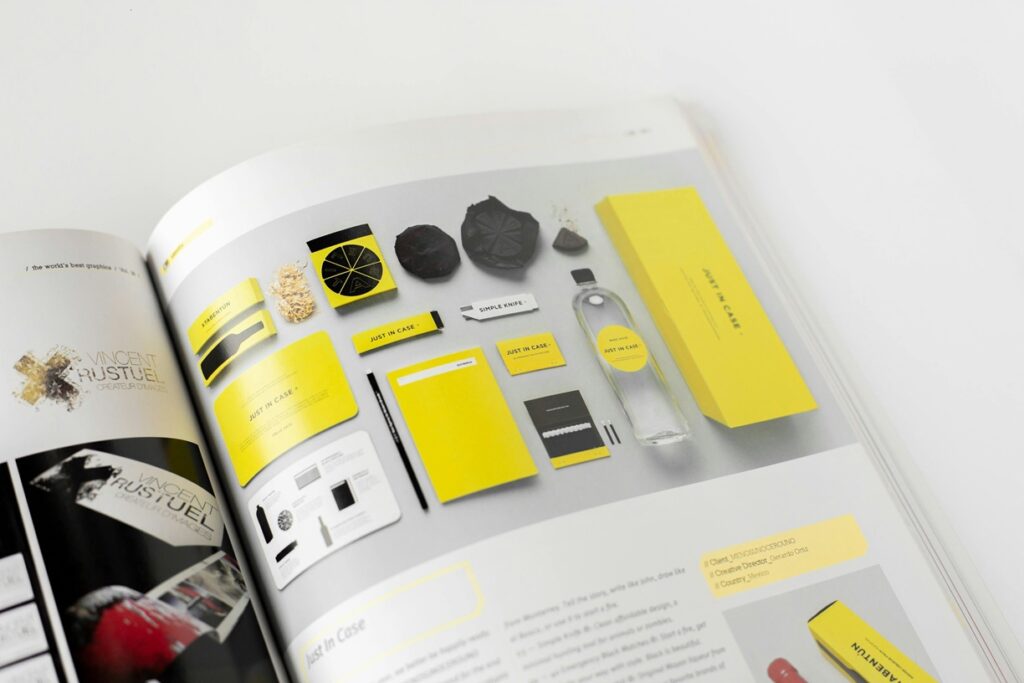
People do not buy products. They buy versions of themselves. They buy the identity, the status, the feeling, and the story that comes with the purchase.
When a Nigerian woman buys a premium skincare product, she is looking at the woman she will become after using the moisturiser. She is buying the version of herself that invests in quality. That prioritises herself. That belongs to a certain tier of consumer. When a business owner invests in a premium branding agency, they are not buying a logo. They are buying the version of their business that finally looks the way it has always felt internally.
This is identity-based buying. And it is the psychological engine behind every successful premium brand in the world.
The question for your marketing is this whose identity is your brand speaking to? Are you marketing to who your client is right now, or who they are trying to become?
The most magnetic marketing in Nigeria right now speaks to aspiration without condescension. It says: I see who you are. I see where you are going. And this brand belongs on that journey.
Look at your current marketing content. Are you describing your product or are you describing your client’s transformation? The shift from product-focused to identity-focused messaging is one of the fastest ways to increase the emotional pull of your marketing.
3. The Psychology of Social Proof — We Follow the Crowd More Than We Admit

In Nigeria, this principle is practically a cultural institution.
We are a community-oriented society. What our peers, our family, our respected circle says about something carries enormous weight in our purchasing decisions. We look to others to confirm that our choices are valid, safe, and aligned with the community we belong to or aspire to join.
This is why word-of-mouth is still the most powerful marketing channel in Nigeria. Because the human brain is wired to seek social validation and in a culture as community-rooted as ours, that wiring is especially strong.
Social proof in your marketing is not just posting five-star reviews. It is making social validation visible, specific, and believable.
Vague testimonials mean nothing. “I loved working with this brand” tells no one anything useful. But “Before working with Vic-Norah I was invisible online. Six weeks after our brand strategy session I signed my biggest client to date” that is a story. That is specific. That is socially credible evidence that the brain processes as trustworthy.
The more specific your testimonials, the more powerful they are psychologically. Because specificity signals truth. And truth builds trust.
Go back to your best clients. Ask them if they were happy, ask them what changed specifically after working with you. What did they gain? What problem was solved? What became possible? The answers to those questions are your most powerful marketing material.
4. The Psychology of Scarcity and Urgency. The Brain Hates Missing Out

FOMO is not a social media trend. It is a hardwired neurological response.
The human brain is loss-averse by design. Neuroscience tells us that the pain of losing something is psychologically twice as powerful as the pleasure of gaining the same thing. This means the fear of missing out is not just emotional, it is biological. And great marketing understands how to activate it ethically.
When your marketing communicates genuine scarcity, limited spots, a closing deadline, a one-time offer, something shifts in the decision-making process of your potential client. The brain moves from passive consideration to active evaluation. The question changes from should I? to can I still?
The Nigerian consumer responds particularly strongly to this because we understand scarcity from lived experience. When something good is available, you move. Because in this market, good things do not always wait.
But manufactured scarcity destroys trust the moment it is perceived as false. If you say there are three spots left every single month, people learn that and stop believing you. Scarcity must be real, or it must be removed from your marketing entirely.
If you genuinely work with a limited number of clients per month say so. If your next available slot is six weeks out, say so. Real constraints honestly communicated create more urgency than any fabricated countdown timer ever will.
5. The Psychology of Reciprocity — Give First, Earn Later

Robert Cialdini, one of the most cited psychologists in marketing, identified reciprocity as one of the fundamental principles of human influence. Simply put; when someone gives us something of genuine value, we feel a natural inclination to give back.
This principle is the psychological engine behind content marketing. Behind free resources. Behind the article you are reading right now.
When Vic-Norah shares branding knowledge freely through articles, through carousels, through videos, something psychological happens with the audience that receives that value. Trust increases. Goodwill accumulates. And when the moment comes that they need what Vic-Norah offers, the relationship is already warm. The door is already open. The brain has already registered this brand as one that gives.
This is why the most successful Nigerian businesses right now are not spending the most on ads. They are the ones investing consistently in genuine value delivery. The accountant who educates clients on tax laws for free. The lawyer who breaks down contracts on Instagram. The brand strategist who writes articles that genuinely change the way business owners think about their brand.
Value given freely comes back multiplied.Ask yourself what knowledge you have that your ideal client would genuinely benefit from. Then give it freely and consistently. Not as a trick. Not as a funnel manipulation. But as a genuine expression of expertise and generosity. That is the kind of marketing that builds brands that last.
6. The Psychology of Anchoring — The First Number Wins

This psychological principle is quietly running every pricing conversation you have ever had, whether you knew it or not.
Anchoring is the cognitive bias where the first piece of information we receive about something becomes the reference point our brain uses to evaluate everything that follows.
In marketing and pricing, this means the first number your potential client sees becomes their psychological anchor. Every subsequent number is then evaluated in comparison to that anchor.
This is why premium brands always show their highest package first. When a client sees a ₦3M product before they see the one for ₦200k, the latter feels accessible almost like a bargain in comparison. If they saw the ₦200k first and the ₦3M second, the reaction would be completely different.
It is also why discounts must be presented carefully. A product shown at ₦50,000 crossed out, now ₦30,000, creates more perceived value than a product simply shown at ₦30,000 even though the final price is identical. The brain is comparing to an anchor. Always.
Review the order in which you present your services and pricing. What anchor are you setting? Are you leading with your most premium offering and letting everything else feel accessible by comparison? Small shifts in presentation order can have significant impact on client decision-making.
7. The Psychology of Emotion — People Decide with Feeling, Then Justify with Logic

This is perhaps the most important and most misapplied principle in Nigerian marketing.
We are taught to lead with facts. With features. With specifications. With all the logical reasons someone should buy from us but after application everywhere is just cricket sound. Nobody buys.
The part of the brain responsible for decision-making, the limbic system does not process language. It processes emotion. Feeling. Gut response. The logical, language-processing part of the brain (the neocortex) comes in after the emotional decision has already been made and its job is not to decide but to justify.
This means that by the time your potential client is reading your list of features and services, they have often already made an emotional decision about whether they want to work with you. Your logical content is not changing their mind. It is giving them permission to act on a decision they already feel.
So the question is not what is the most logical reason someone should buy from you? The question is, what is the emotional experience of encountering your brand? What do they feel when they land on your page? What do they feel when they read your content? What emotion do they carry away from every interaction with your brand?
If the answer is inspired, understood, seen, or excited, your marketing is working psychologically.
If the answer is nothing then you have work to do.
Go through your website, your Instagram bio, your latest three posts. What emotion do they evoke? Not what information do they communicate, what emotion do they create? If you cannot answer that clearly, your messaging needs to shift from informational to experiential.
The Bottom Line
Psychology is not a manipulation tool. Used with integrity, it is the most honest form of marketing there is because it meets people where they actually are, speaks to what they actually feel, and builds relationships rooted in genuine trust and value.
The Nigerian business owner who understands these principles is a better marketer, a better communicator, a better brand builder, and ultimately, a better business owner.
Stop marketing at people.
Start understanding them.
That shift alone will change everything.
At Vic-Norah, we build brands rooted in strategy, that will help you position right to attract premium clients. Ready to build that brand? Contact us via brandhub@vicnorah.com or visit our website www.vic-norah.com